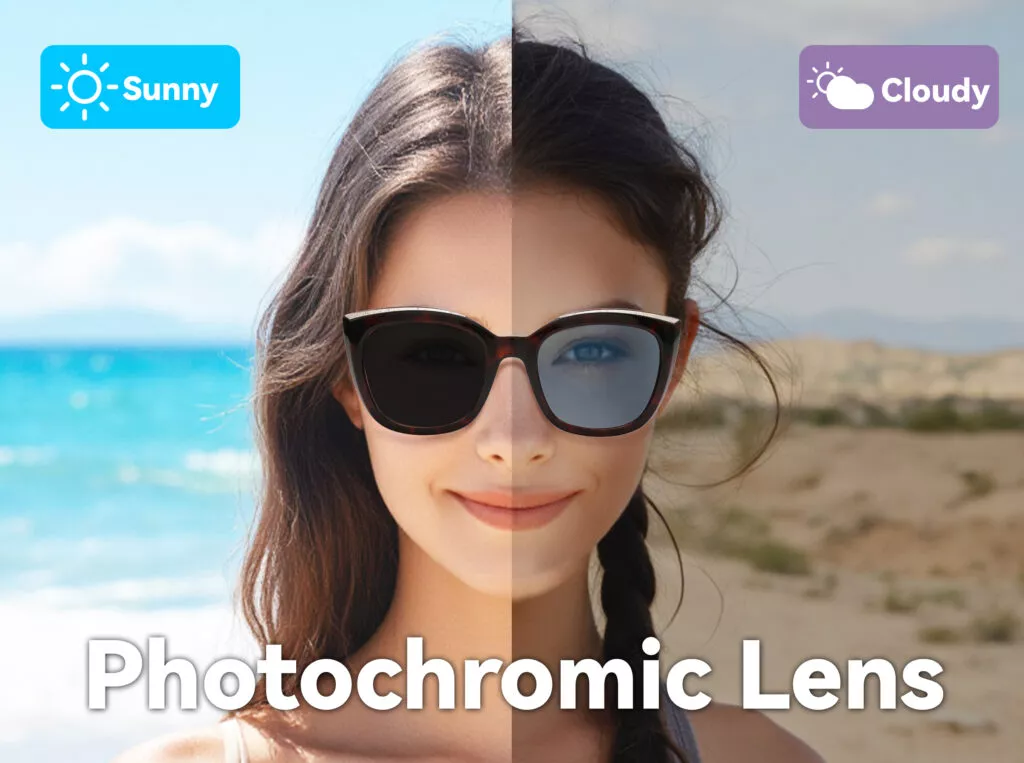
Photochromic lenses work based on a reversible light-induced color-changing reaction.
When exposed to light and ultraviolet (UV) rays, the lenses darken quickly to reduce glare and absorb UV; when you return to darker conditions, they quickly become lighter/clearer again, ensuring good light transmission.
They are especially suitable for people who spend long periods under UV exposure, such as outdoor workers and sports enthusiasts.
FAQ: Frequently Asked Questions
1. Do photochromic lenses work inside a car?
Most photochromic lenses react to UV rays, and since modern car windshields typically filter out UV light, the lenses may not darken inside a vehicle. However, there are specialized lenses designed for driving that react to visible light as well.
2. How long does it take for the lenses to change color and clear back?
Photochromic lenses typically darken within 30 seconds of exposure to sunlight. When returning indoors, they usually take about 2 to 5 minutes to become fully clear, depending on the lens brand and ambient temperature.
3. Does temperature affect the performance of photochromic lenses?
Yes. Photochromic lenses tend to get darker in cold weather than in hot weather. This is because the chemical reaction of the molecules is influenced by thermal energy; in extremely high temperatures, the lenses may not reach their maximum darkness.
4. Do photochromic lenses provide 100% UV protection?
Yes, the vast majority of high-quality photochromic lenses provide 100% protection against both UVA and UVB rays, regardless of whether the lenses are in their clear or tinted state.
5. How long do photochromic lenses last?
The effectiveness of photochromic lenses typically lasts about 2 years. Over time, due to molecular fatigue, the lenses may change color more slowly or may not return to their original level of clarity when indoors.
6. Can photochromic lenses replace sunglasses?
For most daily activities, photochromic lenses are very convenient. However, for prolonged exposure to intense glare (such as at the beach or on snow) or for driving, dedicated polarized sunglasses may still provide a more comfortable visual experience.
—————————————————————–
The above information is from CHENGYI OPTICAL CO., LTD.